A company in the UAE needs several official documents, and the certificate of incorporation is one of the key documents issued during the registration process. Many new business owners hear the term during company registration, then wonder whether it is the same thing as a trade licence, a memorandum, or a simple registration certificate.
It is not. The certificate is evidence that the company has been incorporated or registered as a legal entity. The exact document name and issuing authority can vary with the emirate, jurisdiction, and type of company. That distinction matters when you are opening a bank account, dealing with a supplier, preparing a corporate file, or answering a request from another institution.
At Business Setup Experts, we help founders work through the paperwork without treating every company as if it follows one identical checklist. If you are still deciding where to establish your company, our guide to business setup in Dubai can help you understand the wider setup before you get into individual documents.
What is a Certificate of Incorporation?
In simple terms, a certificate of incorporation is an official record showing that a company has been incorporated or registered. It normally identifies the company and confirms its legal existence from the date stated on the certificate.
Think of it as proof of the company’s birth, not proof that the company can carry out every possible business activity. The business still needs the licences, approvals, permits, and registrations that apply to its activities and location.
The wording can differ between mainland and free zone authorities. For that reason, it is better to check the document issued for your particular company than to rely on a generic sample found online.
The Document People Often Confuse With a Trade Licence
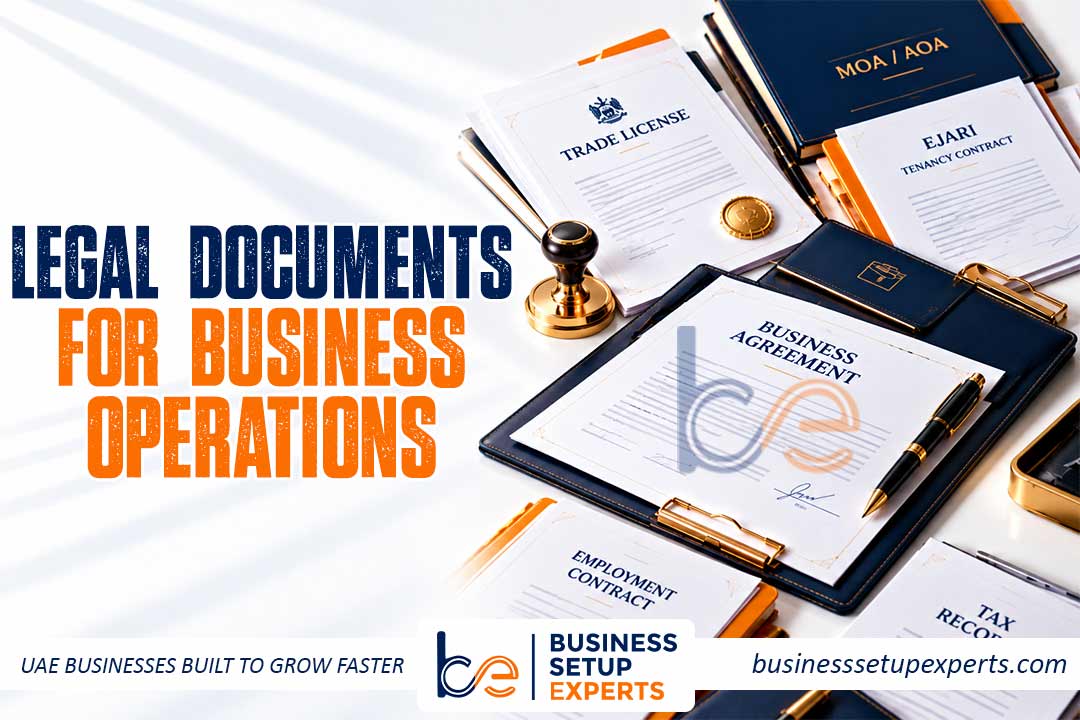
A trade licence tells you about the licensed business activity and the authority that has permitted the business to operate under that licence. A certificate of incorporation serves a different purpose: it records the company’s incorporation or registration.
You may have both documents in your corporate file. In some cases, another organisation may ask for one when you expected the other. Banks, overseas counterparties, landlords, government departments, and professional advisers can each have their own document requirements.
That is also why keeping a complete company file is useful. When someone asks for a corporate document, you can provide the correct record instead of sending a collection of unrelated papers.
When is the Certificate useful?
There is no single list that applies to every UAE company. However, the certificate can help prove that the company is registered. It may be needed for company checks, banking, contracts, investments, or other official processes.
If your company works with businesses outside the UAE, you may face more document requests. A foreign company may ask for proof of incorporation, such as:
-
Company documents
-
Ownership details
-
Authorised signatory IDs before signing a contract.
The safest approach is to ask which documents are needed. Also check if they need a recent or certified copy.
Benefits of Incorporation
The benefits of incorporation go beyond having another certificate in your file. Incorporation gives a company a formal legal structure. It also gives the business a separate identity from its owners, depending on the legal form and UAE law.
This can make business dealings easier to manage. Contracts can be made in the company’s name, and company records can be kept in one place. Ownership can also be recorded in the company’s documents
Incorporation can also make a business easier to explain to banks, suppliers, investors, and other counterparties. It does not automatically make every banking or financing request easier, but a properly maintained corporate structure gives those parties a clearer set of records to review.
What you’ll usually need
The exact requirements of incorporation in UAE depend on the jurisdiction, legal form, business activity, ownership structure, and any sector-specific approval. A technology consultancy, a restaurant, and a regulated financial activity should not be expected to follow the same checklist.
Common items can include proposed company and trade names, shareholder and manager information, identification documents, the selected legal form, constitutional documents, and information about the business activity. Some activities also require external approvals before or during the licensing process.
If a shareholder is another company, additional corporate documents may be needed. Overseas documents can also have their own attestation, legalisation, or translation requirements. Those details should be confirmed for the authority handling the application rather than assumed from a checklist for another jurisdiction.
Mainland and free zone setups are not identical
One common mistake is assuming that a certificate issued in one part of the UAE will look or work exactly like a certificate issued somewhere else. Mainland companies and free zone companies are registered through different authorities, and free zones have their own procedures and document sets.
If you are comparing locations, look beyond the headline registration cost. Consider the activity you need, office or facility rules, visa requirements, ownership structure, banking needs, and the documents you will need later. Our free zone business setup service can be useful if a free zone is one of the options you are considering.
For an official view of Dubai’s investment and business environment, you can also check Invest in Dubai before making a jurisdiction decision.
How the registration usually moves
Although the details vary, the registration journey normally starts with choosing the business activity and legal structure. From there, the company name, ownership information, required approvals, and incorporation documents are prepared for the relevant authority.
Once the authority accepts the application and the required fees and approvals are completed, the company is registered and the relevant corporate and licensing documents are issued. The exact sequence can differ, especially where an activity needs approval from another government body.
After incorporation, there is still work to do. Depending on the business, that may include immigration and visa arrangements, corporate bank account work, tax registrations, accounting, contracts, and sector-specific permits.
What the certificate does not give you
A certificate of incorporation is not a substitute for a business licence. It does not, by itself, authorise a company to conduct every activity in the UAE. It also does not replace a professional permit, health or food approval, environmental approval, or another sector-specific permission where one is required.
This is worth remembering because the words “incorporated” and “licensed” are sometimes used loosely in everyday business conversations. They describe related but different parts of the company’s legal and operational position.
The same point applies to immigration. Incorporating a company does not mean every shareholder, employee, or manager automatically receives a residence visa. Visa eligibility and processing are separate matters.
What about legal satisfaction?
You may come across the phrase legal satisfaction in articles or business discussions about incorporation. It is not a standard UAE incorporation document that every company receives under that name.
If someone uses the phrase to describe a legal or administrative requirement, ask them to identify the actual document or approval they mean. In UAE company formation, the precise name of the certificate, licence, approval, or corporate document matters. Using the wrong label can lead to confusion when you are preparing a file for a bank or government authority.
Keep your corporate records together
Keep your certificate of incorporation with your company papers.
These may include your:
- Trade licence
- Company documents
- Shareholder details
- Office papers and approvals.
Check your documents often. Note any expiry dates. Update them when your company details change.
Good records make things easier. Banks, clients, auditors and government offices may ask for these documents.
Common mistakes to avoid
- Treating the certificate of incorporation as if it were the business licence.
- Using a generic checklist without checking the authority handling your application.
- Assuming mainland and free zone documents follow the same format.
- Ignoring activity-specific approvals until the end of the setup.
- Sending a requester an old corporate document without checking whether a current copy is required.
- Using an informal document name when the bank or authority has asked for a specific certificate.
Frequently Asked Questions
Q1. Is a certificate of incorporation the same as a trade licence ?
No. They serve different purposes. The certificate shows that the company is registered. The trade licence allows the company to carry out its approved business activity.
Q2. Who issues a certificate of incorporation in the UAE ?
The relevant registration or licensing authority issues the document. The authority depends on where the company is established and the type of company involved.
Q3. Do all UAE companies receive the same certificate ?
No. Document names, formats, and procedures can vary between mainland authorities and free zones. Check the documents issued for your specific company.
Q4. Can I use the certificate for opening a corporate bank account ?
It may be requested as part of the bank’s corporate documents, but each bank has its own onboarding and due-diligence requirements. A certificate alone does not guarantee account approval.
Q5. Does incorporation give the company permission to carry out any business activity ?
No. The company must hold the licence and any additional approvals required for its chosen activities and location.
Conclusion
Getting a certificate of incorporation is one part of establishing a company in the UAE, but it should not be viewed in isolation. The document confirms that the company has been incorporated or registered; it does not replace the business licence or any approval needed for the activity. Keeping that distinction clear makes company paperwork much easier to manage.
For a new founder, the bigger question is usually not “How do I get a certificate?” It is “What does my company actually need from day one?” The answer depends on the business activity, legal form, ownership, location, office or facility requirements, and any approvals attached to the sector. Mainland and free zone companies can follow different procedures, so copying a checklist from another business can create unnecessary delays.
Once the company is established, keep the certificate with your core corporate records.
- Your trade licence
- Constitutional documents
- Ownership information
- Approvals
- Other company records should be organised.
Company formation is easier when the paperwork is planned around the actual business instead of a one-size-fits-all checklist. At Business Setup Experts, we can help you choose a suitable setup, prepare the required information, and coordinate the company formation process.
If your company also needs government paperwork, renewals, document processing, or other administrative support, our PRO Services in Dubai team can help with those requirements as well.
If you already know what you need and want to discuss your case, contact Business Setup Experts or message us on WhatsApp.